
By Larry Goral
Moving can be an onerous task, the excitement of new horizons notwithstanding. First, there’s the searching for the next new home: the finding, the losing, the finding again, and finally the bureaucratic labyrinth of real estate transactions. Then the packing up of the old one: winnowing, wrapping, and filling every interstice with something that might or might not be relevant but is approximately the right shape and weight for that particular void. In any case, we moved: first from Northern California to New Mexico; then, two years later, having exhausted our initial enthusiasm for the desert, to Bayfield, Colorado, just this side of Durango, where, for the first time in my life I ventured into a writing community.
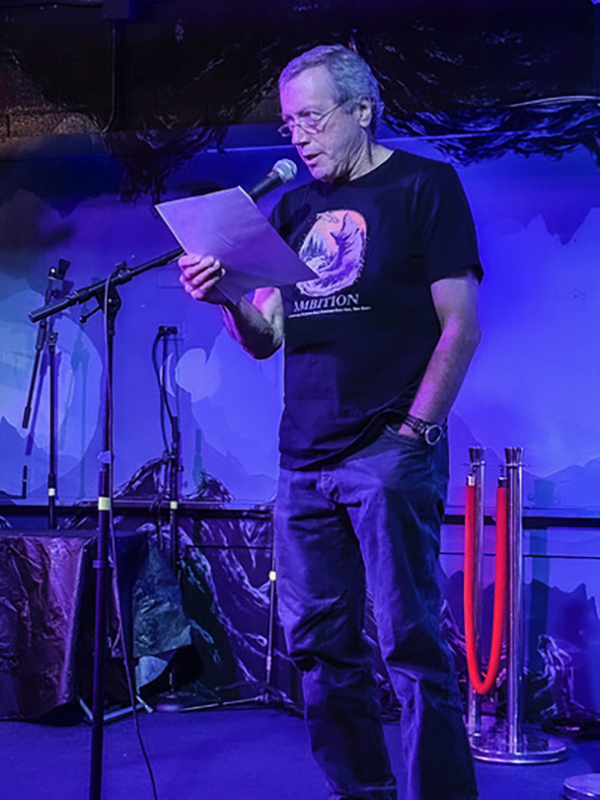
Despite considering myself primarily a novelist, I dove into the local poetry scene, learning to stand before audiences and read aloud poems that had only ever been written for the page. It was a revelation, bringing inclusion in the Four Corners Anthologies (a photo on the cover of Volume I, a poem and an essay in Volume II, and long-sought validation), breathtakingly close and sudden friendships, communion over the written and spoken word, and deepening bonds.
Then, we decided to move again. There were solid, pragmatic reasons for the decision. But every move is both a ripping free and a tentative leap of faith: that what comes will be as good as what has been left behind, or at least no worse.
Not wanting to give up what I’d gained in the writing community, I was determined to seek its replacement before we even found our next house. Knowing that independent book stores, or, more appropriately, the people who run them, provide a haven for lovers of literature, I picked The Eclectic Reader on the basis of its name. I chose the book by its cover.
The woman who owns it was delighted and delightful to engage with. She gave me a list of other bookstores to investigate, but told me in no uncertain terms that the Wolverine Farm Publick House was the place to connect with the local writing scene.
So I went there next. This was all, you understand, in the hours before our first house-viewing appointment of the day. As I entered through the enchanting pollinators’ garden, the incense of books and coffee, the delightful hobbity architecture of controlled chaos, the wild diversity of staff and clientele, all shouted out that I’d found the motherlode. The lovely woman behind the counter pointed me to the bulletin board proclaiming the GuloGulo Poetry Collective.
Tuesdays, then. I didn’t even need to write it down. Just Tuesdays. When we went back to Bayfield, having failed to find a house but having scored on the poetry hunt, I signed up for the email list.
It was several months before we actually moved, but as I told my poetic compadres in Durango about the move, I assured them that I’d already found a new poetry group. It was mitigation, at least, for the painful disruption of leaving.
The second week after we took possession of our new abode, not yet nearly unpacked, I made my first appearance with the timorousness (which I attempted to camouflage) of the stereotypic new kid in class. Arriving early (because shouldn’t the new kid at least be prompt?) and almost before I sat down, Booger introduced himself and greeted me, his warmth a suffusion of proactive acceptance. Even though it was the monthly board meeting, I was welcomed. I was invited to participate. And in the few short weeks since, I’ve been listened to, coached, edited, and even asked to contribute this blog post. I’m already hoping for inclusion in the next anthology.
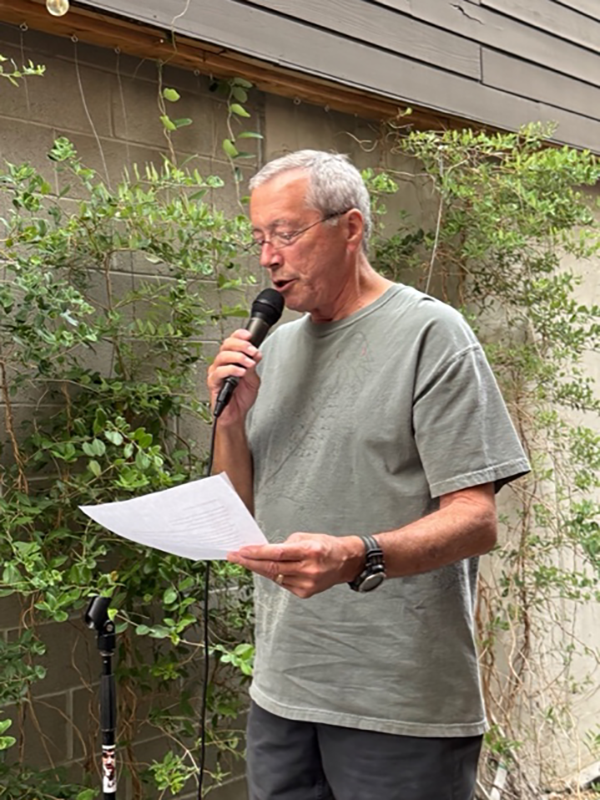
I’m still the new kid (using the term ‘kid’ loosely, since I’m in my 70s). It takes time to subsume oneself into any new setting. But learning names, hearing my own on others’ lips, I’m confident in ultimate integration. Further, I’ve seen that the power and commitment of this particular community will only serve to challenge me, push me to new levels of skill and knowledge. It is a serious wealth of talent that converges on the Wolverine Farm Publick House every week, and that disburses its artistry throughout the broader community.
There’s one more aspect to our geographical reset only tangentially related to the journey of the poem. For a period in the late 1970s and early 1980s, I spent at least a part of every summer at a remarkable youth hostel outside Estes Park. The encounters I found there altered my life profoundly, leading me to Europe, North Africa, and Asia in my early 20s. That journey reshaped my worldview, permanently. And while the intervening decades stretched those memories thin, they never broke. Relocating to Northern Colorado set up a heart-thrum of nostalgia, as my wife Dana and I drove up to the gate leading to the H bar G ranch, where the hostel once thrived, and sat for a time, letting remembrance percolate.
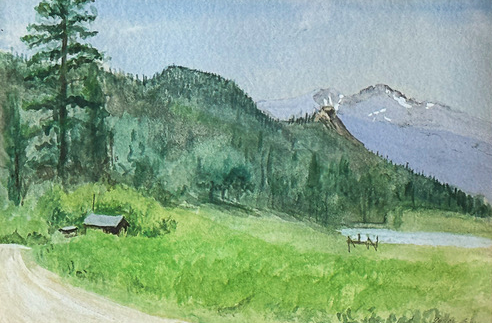
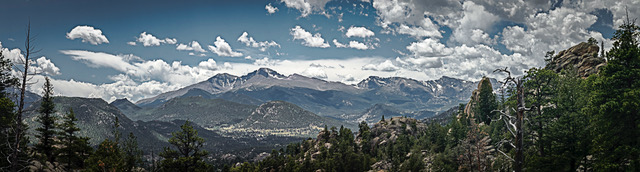
Since we’ve been here, we’ve managed several hikes in the Estes Park neighborhood. The benign ghosts from the last century accompany me on every mile.
So in more than one sense, including the engagement with GuloGulo and the reconnection with those foundational early days, it’s been a kind of homecoming, both literal and figurative. All change is a form of disruption, and change is axiomatic. Struggling against it is a fool’s crusade. Embracing it, even celebrating it, is a form of liberation. Movement—whether the nomadism of the open road or the arduous relocation of household after household—is a mode of disruption that, willingly accepted, can keep the mind and heart open, alert, receptive, and ultimately alive.
You can learn more about Larry and his work, and sign-up for his monthly newsletter at his website: www.lawrenceblairgoral.com.
Greetings – Booger here.
You, my friend, will rue the day that you decided to share your writing ability so flagrantly when we are so in need of the publication tools that you bring to our community. It’s a joy to me, as a Boomer, to share our sagely perspective with our younger writers and I welcome what you can bring to the GuloGulo tribe of poets. This is well written, and I would guess that you have some experience in editing and creating content. Being that you will probably be staying in the local area together, let’s make use of your talents. It’s a pleasure to welcome you into our community and I look forward to an opportunity to sit and chat with you about your interests and intentions with the Gulo gang.
And all that formal stuff: let’s have a beer together.
-Booger